
SSW Salary in Japan: What You Actually Take Home After Deductions
A typical SSW gross salary is JPY 180,000 to 250,000 a month, but your payslip will show less. Here is every deduction, what is normal, and how to get some of it back later.
Information only, not legal advice. Verify with the DMW and the Embassy of Japan before you act.
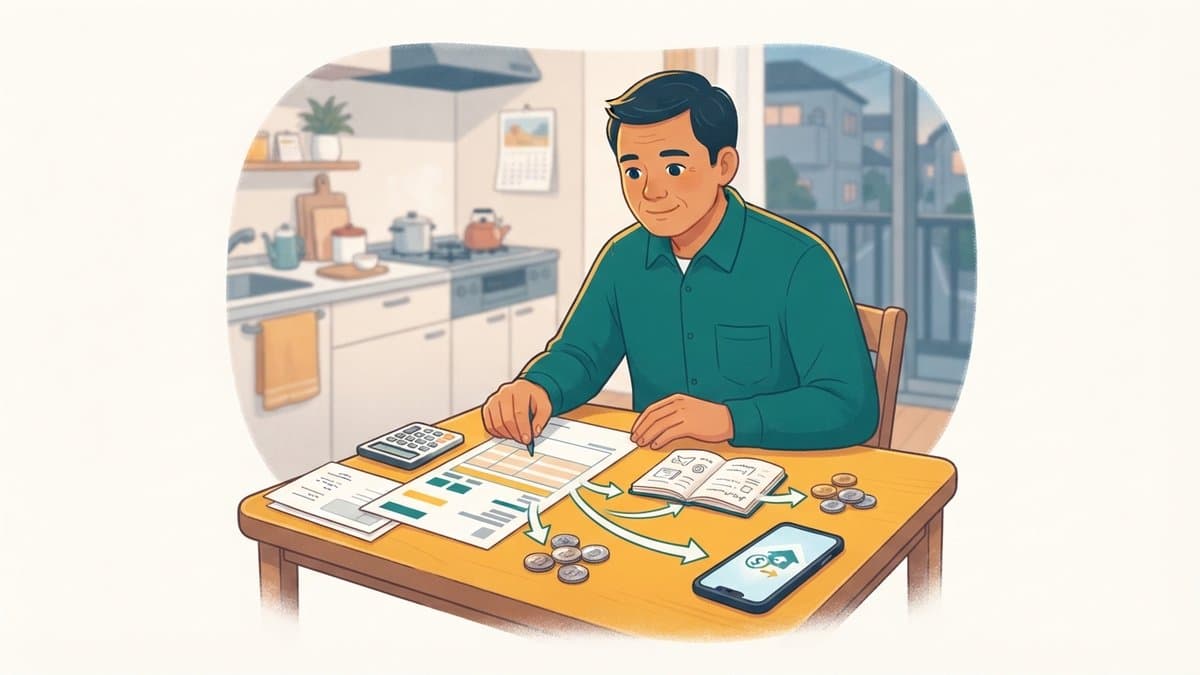
Key Takeaways
- Typical SSW gross salary as of 2026 is roughly JPY 180,000 to 250,000 per month, depending on field and region. Confirm your own figure in your contract.
- Standard deductions are health insurance, pension, employment insurance, income tax, and often housing. Residence tax starts from your second year.
- Expect take-home to be noticeably lower than gross. Plan your remittance on the net figure, not the gross.
- Part of your pension contributions can be claimed as a lump-sum withdrawal within 2 years after leaving Japan.
- Residence tax bills can arrive after you leave. Appoint a tax representative before you go home.
Start with the right number
Recruiters like to talk about gross salary because it is the bigger number, and your family will plan around whatever number you tell them. So before you promise anyone a monthly remittance, understand what your Japanese payslip will actually look like.
As of 2026, a typical SSW (i) contract shows a gross monthly salary somewhere between JPY 180,000 and 250,000. Caregiving and construction in big cities tend to be at the higher end. Agriculture and food processing in rural areas tend to be lower. Overtime, night shifts, and bonuses can add to this, but do not count on them until you see them on a payslip. Your contract must state the base salary, and it must be equal to what a Japanese worker doing the same job would receive.
See /money for how to read a Japanese payslip line by line.
The deductions, one by one
Japan's system is different from the Philippines. Several things are deducted at source by your employer, by law, before the money reaches your bank account. These are not scams. They are the same deductions every Japanese worker pays.
Health insurance (kenko hoken). Covers about 70 percent of your medical costs at any clinic or hospital in Japan. You pay the other 30 percent when you visit. The premium is split with your employer; your share is calculated as a percentage of your salary and varies by prefecture.
Pension (kosei nenkin). Japan's employee pension. Also split with your employer. Your share is a fixed percentage of your standardized monthly salary. This is the one people resent most because they think they will never see it again. Keep reading; part of it comes back.
Employment insurance (koyo hoken). A small percentage. It funds unemployment benefits if you lose your job through no fault of your own.
Income tax (shotokuzei). Withheld monthly based on your salary and dependents. For an SSW-level salary, it is usually a modest amount. Your employer does a year-end adjustment in December.
Residence tax (juminzei). Local tax based on your previous year's income. Because it is based on the previous year, you pay nothing in your first year in Japan. From your second year it is deducted monthly, and it is often the deduction that surprises people the most. Budget for a drop in take-home in year two.
Housing. Many employers provide a room or apartment and deduct rent from salary. This must be stated in your contract with the amount. It is legal, but it should be reasonable and not a hidden way to recover recruitment costs.
Utilities and other agreed items. Electricity, water, gas, sometimes internet, if the employer arranges them. Again, only what is in writing.
What must never be deducted: recruitment or placement costs, "support organization fees," test fees, visa costs, or any kind of penalty for wanting to leave. If you see these on a payslip, talk to your registered support organization, and if they are the problem, talk to the Labor Standards Inspection Office.
A rough picture of take-home
We will not give you a fake exact number, because your real number depends on your prefecture, age, salary, and dependents. But here is the shape of it.
For a single worker with a gross salary in the typical SSW range, the combined social insurance deductions (health, pension, employment) usually come to a meaningful share of gross, in the general range of 14 to 16 percent as of 2026. Income tax adds a small amount on top. In year two, residence tax adds more. Then housing, if provided.
So a worker who was told "JPY 200,000" might see a first-year net after insurance and income tax that is noticeably lower, and then rent taken from that. In year two, take-home dips again when residence tax begins. This is normal. It is not the employer cheating you. But you need to know it before you tell your family a number.
Ask your agency or employer for a sample payslip for someone in the same job before you sign. A good employer will show you. Confirm the current rates on the official pension and health insurance websites.
Cost of living is the other half
Deductions leave before you get paid. Living costs leave after. Food, phone, and transport in Japan are typically higher than in the Philippines, though employer housing near the workplace keeps transport low. Your first two months are the most expensive because of setup costs. Plan for that gap before your first remittance.
Getting money home
Use a licensed remittance service or bank transfer. Compare the exchange rate and the fee together. Never hand cash to an informal courier or let anyone "hold" your ATM card. Set a fixed monthly amount based on your net pay after a couple of real payslips, not on the gross figure. /money has a comparison method.
The pension refund: do not leave it behind
Here is the part that most people never hear about until it is too late.
When you leave Japan for good, you can claim a lump-sum withdrawal of part of your pension contributions. You must apply within 2 years after leaving Japan. The amount depends on how long you contributed and your salary, and it is capped at a set number of months of contributions. For an SSW (i) worker who stayed several years, it can be a significant sum.
Practical steps:
- Before you leave Japan, get the lump-sum withdrawal claim form from the Japan Pension Service website or your city office.
- Keep your pension handbook or your basic pension number.
- Notify your city office that you are moving out of Japan.
- After you are back in the Philippines, submit the claim with your bank details.
- A portion of the payment is withheld as tax. You can claim part of that back too, but only if you appointed a tax representative in Japan before leaving.
Set a reminder for the 2-year deadline the day you land in Manila.
Residence tax after you leave
Residence tax is billed based on the previous year's income, so a bill can arrive after you have already gone home. If nobody in Japan handles it, it stays unpaid, and that can cause problems if you ever return to Japan under SSW (ii) or another status.
The fix is simple: before leaving, appoint a tax representative (nozei kanrinin) at your city office. This can be your employer, your support organization, or a trusted person in Japan. They receive the bill and you arrange payment. Many employers will settle the remaining residence tax from your final salary if you ask. Get that in writing too.
What to check before you sign
- Base salary amount and the statement that it matches Japanese workers in the same role
- Every deduction, with amounts, especially housing and utilities
- Whether airfare is covered (it often is, per contract, but confirm in writing)
- Overtime rate and how it is calculated
- Who your registered support organization is and that they charge you nothing
Use /check to walk through the contract. Nobody can promise you a specific take-home. What you can do is read the contract and ask for a sample payslip. That one request tells you a lot about the employer.
Sources
- Immigration Services Agency of Japan / Ministry of Justice: SSW employment conditions and equal treatment requirement
- Japan Pension Service: lump-sum withdrawal payment, 2-year claim window
- Japanese municipal residence tax and tax representative (nozei kanrinin) procedures
- Department of Migrant Workers (DMW): contract verification for Japan
- OWWA: pre-departure financial orientation
- Hanapon: /money, /check
About this guide
Free, honest guide to working and studying in Japan
- ●Every rule is checked against DMW and Immigration Services Agency sources
- ●Written in plain English, with Tagalog where it matters
- ●No job ads, no referrals, no fees from agencies
- ●Corrections welcome through the contact form
Hanapon is run from Manila by a Japanese engineer who reads the Japanese-language rules directly and checks them against what agencies tell applicants here. If something on this page is out of date, tell us and we will fix it.
Before you pay anyone, check the license.
Free, one minute, and it is the single step that stops most scams.
Related Articles
Caregiver Monthly Salary in Japan (2026): Official Averages
Caregivers in Japan earned JPY 338,200 a month on average (MHLW, Sept 2024). See what it includes, pay by facility and qualification, and the June 2026 raise.
10/19/2026
Send Money from Japan to the Philippines: Fees and Rates
Compare Instarem, Wise, SBI Remit, PayPal and banks for sending yen to the Philippines, with real received amounts, GCash limits, and SHA vs OUR explained.
9/28/2026
The Real Cost of a Japan Work Visa: A Full Breakdown
A Japan work visa for SSW costs roughly PHP 12,000 to 20,000 in real government and clinic fees. Here is every item, a low and a high estimate, and why the total itself can tell you if you are being scammed.
9/23/2026
Japan Pension Refund Tax Representative: Getting the 20.42% Back
Japan keeps 20.42% of your pension lump sum as tax. Many workers can get all of it back, but only through a tax representative in Japan. Who can be one, the forms, when to file, and how much comes back.
9/14/2026