
Driving in Japan With a Philippine License: IDP or Full Conversion?
A Philippine license alone does not let you drive in Japan. You need an international permit for a short stay, or a full conversion if you live here — and conversion got harder in October 2025.
Information only, not legal advice. Verify with the DMW and the Embassy of Japan before you act.
Key Takeaways
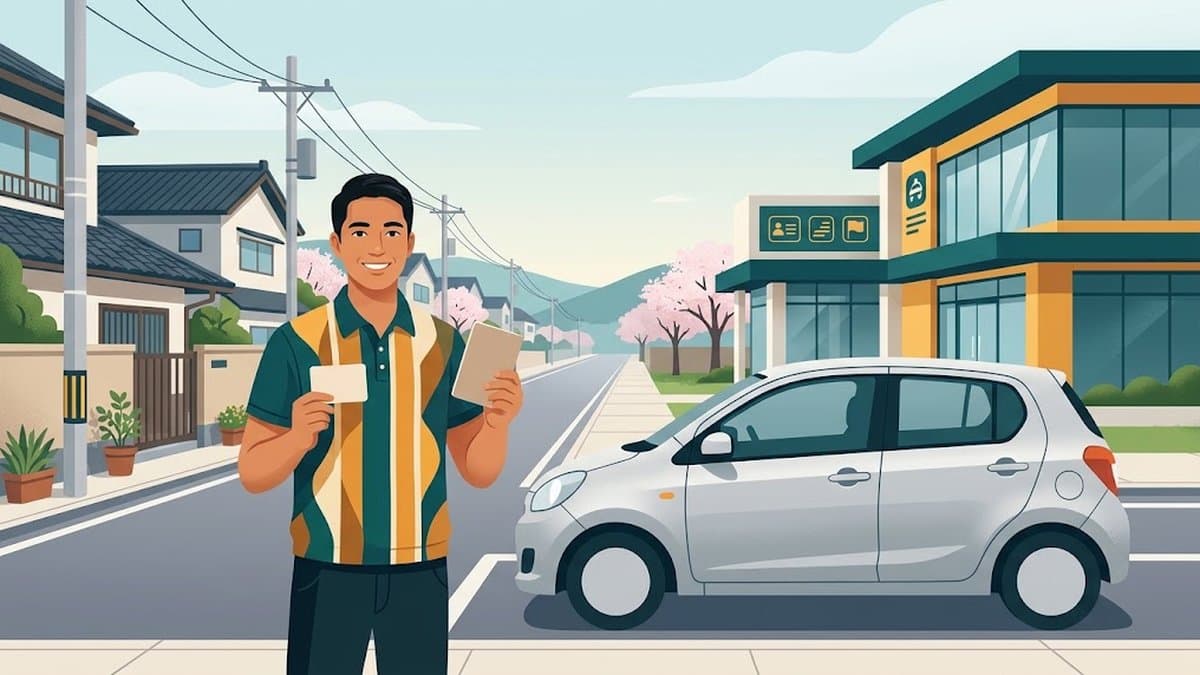
- A Philippine driver's license by itself does not let you drive in Japan. You need either a Geneva-format International Driving Permit (IDP) or a Japanese license.
- The IDP is for short stays. It works for up to one year from the day you land in Japan, or one year from the day it was issued, whichever ends first.
- If you are living and working in Japan, you eventually need to convert to a Japanese license (gaimen kirikae). The IDP does not renew itself into one.
- To convert, you must show you held your Philippine license and actually lived in the Philippines for three months or more after getting it. Most SSW and TITP workers already meet this, since they got licensed years before coming to Japan.
- Rules for the conversion got stricter on October 1, 2025: the written test grew from 10 to 50 questions and now requires 90% correct, and the driving test added new tasks and tougher grading.
- The Philippines is one of the countries where the required paperwork includes an apostille. Get your License History, Official Receipt, and an apostilled certification from the LTO before you fly, if you can.
Two different questions, two different answers
"Can I drive in Japan with my Philippine license" is really two separate questions, and mixing them up is how people end up driving illegally without realizing it. The first question is whether you can drive during a visit or the first year of a work assignment. The second is whether you can keep driving once that first year is over. The Philippine license printed at home answers neither question by itself. What answers them is a separate document: either an International Driving Permit for the first case, or a converted Japanese license for the second.
Short stay: bring an International Driving Permit, not just your license
Japan recognizes International Driving Permits issued under the 1949 Geneva Convention on Road Traffic. The Philippines is one of the countries whose IDP is accepted, according to the current list published by the Tokyo Metropolitan Police Department, so a Geneva-format IDP from the Philippines is valid for driving in Japan. Your Philippine license on its own, even with an English translation stapled to it, is not.
The IDP is issued in the Philippines by the Automobile Association of the Philippines (AAP), not by the LTO. You apply with your original and a photocopy of your valid Philippine license, a passport-sized photo, and a completed application form, before you leave the country. Get it done ahead of your trip: there is no equivalent office in Japan where you can apply for a Philippine-issued IDP after you land.
How long the IDP actually covers you
The National Police Agency sets the limit as whichever ends first: one year from the day you land in Japan, or one year from the day the IDP was issued back in the Philippines. Those two dates rarely match, since most people apply for the IDP weeks before they fly. If you leave Japan and come back within three months while your address is still on the resident record (juminhyo), that trip does not reset the clock. A worker who arrives partway through their IDP's one-year window may run out of driving eligibility before the card itself expires, so check both dates before you get behind the wheel.
Living in Japan: the IDP eventually runs out, and conversion is the only way forward
If your stay goes past what your IDP covers, the only legal way to keep driving is gaimen kirikae: converting your Philippine license into a Japanese one. This is not automatic and not instant. You apply in person at the driving license center (menkyo center) for the prefecture where you live, and the process includes both a written knowledge check and a practical driving test, on top of the paperwork.
| Route | Who it's for | How long it lasts |
|---|---|---|
| International Driving Permit | Visitors and workers in their first year | Up to 1 year from arrival, or 1 year from issuance, whichever is shorter |
| Gaimen kirikae (conversion) | Residents who need to keep driving past that first year | A full Japanese license, renewed on the normal schedule |
The three-month rule you need to clear first
Before the driving license center will even schedule your tests, you have to prove that you held your Philippine license and actually lived in the Philippines for three months or more, counted from after the date you got the license. This is meant to stop people from converting a license they obtained just before leaving the country, without ever really driving on it. It is normally proven with the entry and exit stamps in your passport. If you got your Philippine license as a young adult and only came to Japan years later, as most SSW and TITP workers did, you clear this requirement without needing to do anything extra.
What changed on October 1, 2025
The Tokyo Metropolitan Police Department confirmed a nationwide revision to the conversion process, effective October 1, 2025. It followed a string of serious accidents involving drivers on converted foreign licenses, and a public debate over how easy the old test had become.
- Written test: the test dropped illustration-based questions, grew from 10 questions to 50, and raised the passing line from 7 out of 10 to 45 out of 50 — both around 90%. Test centers now run it only once a day, in the afternoon.
- Driving test: examiners added tasks around crossing a crosswalk, and tightened the grading standard overall, closer to what a first-time Japanese applicant faces.
- Paperwork: applicants covered by Japan's resident registration system (juminhyo) now need a copy of that record showing specific immigration details: nationality, residence status, and period of stay, dated within six months. Short-term visitors without a resident record generally cannot apply for conversion at all now, aside from a small list of exceptions such as diplomats.
If your plan was to wing the old ten-question quiz, that plan no longer exists. Budget real study time before you book a test slot.
The documents the Philippines specifically requires
Document requirements differ by country, since Japan cannot verify a foreign record on its own. For Philippine licenses, the Tokyo Metropolitan Police Department's country-by-country list asks for:
- A certification of your license from the LTO, carrying an apostille
- Your License History from the LTO
- Your Official Receipt (OR) for the license
- An apostilled Immigration Record, if your passport stamps alone cannot confirm how long you stayed in the Philippines after getting your license
The Philippines joined the Apostille Convention in 2019, so this is a single-step authentication at the Department of Foreign Affairs, not the older multi-step "red ribbon" process. Sort these documents out on a trip home if you can, since getting an apostille from Japan is far more roundabout than doing it in the Philippines.
Translating the license itself
Separately from the documents above, your Philippine license needs a Japanese translation. Japan only accepts one from specific sources: JAF (Japan Automobile Federation), a small number of other government-designated translators, or the Philippine Embassy or Consulate in Japan itself. A translation from a regular translation agency, even a certified one, will not be accepted at the counter.
Putting it together at the driving license center
- Confirm your gaimen kirikae eligibility: three months or more of residence in the Philippines after your license was issued.
- Collect the Philippines-specific documents (apostilled certification, License History, Official Receipt) plus your passport showing entry and exit stamps.
- Get a Japanese translation of your license from JAF or the Philippine Embassy/Consulate.
- Bring your resident record (juminhyo) with the immigration details, dated within six months.
- Apply at the driving license center for your prefecture, sit the 50-question written test, and pass the practical driving test.
Processing time is not fixed, and it depends on the prefecture and how complete your paperwork is on the first visit. If you are also timing this around a job that requires driving, apply with margin rather than assuming a single visit will finish it.
Driving is usually just one piece of settling in for the long term. Our guides on changing jobs in Japan under SSW and permanent residency requirements cover the other steps that tend to come up around the same stage.
Sources
- Tokyo Metropolitan Police Department: Information on Geneva Convention signatory countries
- National Police Agency: For those who hold a foreign driver's license
- Tokyo Metropolitan Police Department: Revised Road Traffic Act Enforcement Regulations, effective October 1, 2025
- Tokyo Metropolitan Police Department: List of Required Documents by Country (PDF)
- Automobile Association of the Philippines: International Driving Permit
About this guide
Free, honest guide to working and studying in Japan
- ●Every rule is checked against DMW and Immigration Services Agency sources
- ●Written in plain English, with Tagalog where it matters
- ●No job ads, no referrals, no fees from agencies
- ●Corrections welcome through the contact form
Hanapon is run from Manila by a Japanese engineer who reads the Japanese-language rules directly and checks them against what agencies tell applicants here. If something on this page is out of date, tell us and we will fix it.
Before you pay anyone, check the license.
Free, one minute, and it is the single step that stops most scams.
Related Articles

Certificate of Eligibility for a Japan Dependent Visa (2026)
How a Filipino in Japan brings a spouse and children on the Dependent visa: who can sponsor, the free COE (1–3 months), TB screening and the Visa Center.
10/22/2026
Changing Jobs in Japan on SSW: What Your Visa Actually Requires
Your SSW visa is tied to a named employer. Changing jobs always means a status of residence application, and the rules differ sharply depending on whether you stay in the same field.
9/19/2026

Permanent Residency in Japan: Requirements for SSW and TITP Workers
Permanent residency in Japan needs 10 years total, but SSW (i) and TITP years don't count toward the 5-year work-status part. Here is what actually counts, and what is about to change.
9/18/2026
Japan Pension Refund: How to Claim the Lump-sum Withdrawal Payment
Left Japan after paying into the pension for 6 months or more? You can claim part of it back, but only within 2 years. Here are the conditions, the documents, the amount, and the mistakes that delay the money.
9/13/2026

Registered Support Organizations in Japan: What They Must Do for You (and Must Never Charge)
SSW (i) workers get support from their employer or a registered support organization. Here is what they owe you, the 3-month check-in, and why support is free.
9/10/2026