
Japan Pension Refund: How to Claim the Lump-sum Withdrawal Payment
Left Japan after paying into the pension for 6 months or more? You can claim part of it back, but only within 2 years. Here are the conditions, the documents, the amount, and the mistakes that delay the money.
Information only, not legal advice. Verify with the DMW and the Embassy of Japan before you act.
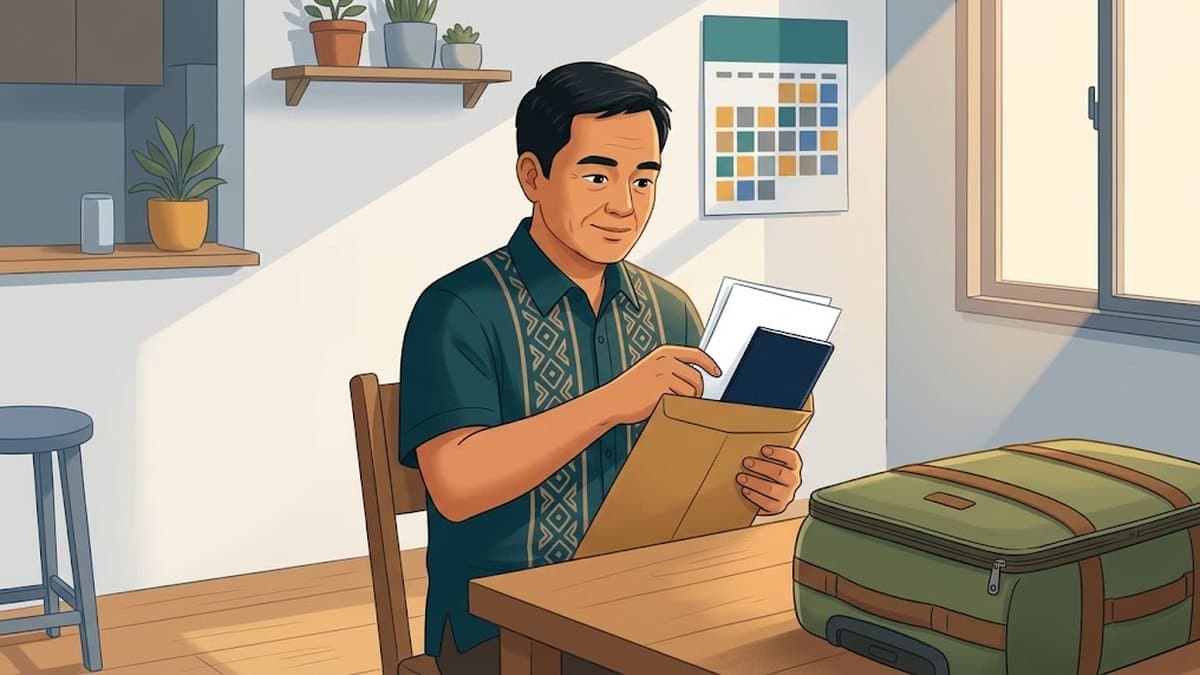
Key Takeaways
- The "Japan pension refund" is officially the Lump-sum Withdrawal Payment (脱退一時金, dattai ichijikin). You can claim it after you leave Japan for good if you paid into the pension for 6 months or more and you are not entitled to a Japanese pension.
- The deadline is 2 years from the day you no longer have an address in Japan. Miss it and the money is gone.
- The amount is counted up to a cap of 60 months (5 years). For the Employees' Pension it is your average monthly pay times a rate from 0.5 to 5.5. Then 20.42% income tax is withheld, and you claim that tax back separately.
- File the moving-out notification (転出届) at your city hall before you leave. It is the one step that makes everything else simple.
- Payment takes about 4 months after the Japan Pension Service receives a complete claim. It arrives in US dollars for a Philippine bank account.
- Taking the lump sum erases all your Japanese pension months. The Philippines and Japan have a totalization agreement, so read the section on it before you decide.
What the payment is, and what it is not
Every month in Japan, money was taken from your payslip for the Employees' Pension Insurance (厚生年金, kosei nenkin). If you were a student or self-employed, you paid the National Pension (国民年金, kokumin nenkin) yourself instead. That money builds a Japanese old-age pension, which you can only receive after 10 years of coverage.
Most Filipinos on TITP, SSW (i), or a student visa leave before 10 years. For them, Japan gives back a part of the contributions as a one-time payment. That is the Lump-sum Withdrawal Payment. It is not a full refund of what you paid. It is a fixed amount set by a formula, and it is capped.
There is a calculator on our /pension-refund page if you want a number right now. This article is the paperwork: who qualifies, what to send, where, and what goes wrong.
Who can claim: the conditions
The Japan Pension Service lists these conditions. You need all of them.
| Condition | What it means in practice |
|---|---|
| You are not a Japanese national | Filipino citizens qualify |
| You are no longer insured under any Japanese public pension | You have left your job and left Japan, or filed the moving-out notification |
| You paid in for 6 months or more | Employees' Pension months, or National Pension months actually paid (unpaid months do not count) |
| You have less than 10 years (120 months) of qualifying coverage | If you have 10 years or more, you get a real pension instead, and you cannot claim the lump sum |
| You have never had the right to receive any Japanese pension | Including disability benefits |
| You no longer have an address in Japan | Proven by your moving-out notification or a deleted residence record |
| You claim within 2 years | Counted from the day after your moving-out date |
One trap in that list: the re-entry permit. If you leave Japan on a re-entry permit without filing the moving-out notification, the Japan Pension Service still treats you as a National Pension insured person until the permit expires. You cannot claim until then. File the notification, and the trap disappears.
How much you get
Employees' Pension (most workers)
The formula is your average standard monthly remuneration across your insured months, multiplied by a payment rate that depends on how many months you were covered. "Standard remuneration" is a bracketed version of your gross monthly pay, and since April 2003 it includes bonuses. It is the figure your employer reported to the pension office, not your take-home pay.
These rates apply when your last insured month is April 2021 or later.
| Months of coverage | Payment rate |
|---|---|
| 6 to 11 | 0.5 |
| 12 to 17 | 1.1 |
| 18 to 23 | 1.6 |
| 24 to 29 | 2.2 |
| 30 to 35 | 2.7 |
| 36 to 41 | 3.3 |
| 42 to 47 | 3.8 |
| 48 to 53 | 4.4 |
| 54 to 59 | 4.9 |
| 60 or more | 5.5 |
A worked example, using a round average standard remuneration of 200,000 yen a month. Your own figure will differ.
| Months worked | Rate | Gross payment | 20.42% tax withheld | What lands in your account |
|---|---|---|---|---|
| 12 | 1.1 | 220,000 yen | 44,924 yen | 175,076 yen |
| 36 (3-year TITP) | 3.3 | 660,000 yen | 134,772 yen | 525,228 yen |
| 60 (5-year SSW) | 5.5 | 1,100,000 yen | 224,620 yen | 875,380 yen |
| 90 | 5.5 (capped at 60) | 1,100,000 yen | 224,620 yen | 875,380 yen |
Read the last row twice. After 60 months the payment stops growing, but claiming still wipes out every month you have, all 90 of them. The tax withheld is not lost either. It can be claimed back, and that is covered further down.
National Pension (students, dependents, self-employed)
The National Pension version is a flat amount based on the premium in the year you last paid, times half, times a number for your months. No income tax is withheld from it. For a last payment made between April 2026 and March 2027, the Japan Pension Service publishes these amounts:
| Months paid | Payment |
|---|---|
| 6 to 11 | 53,760 yen |
| 12 to 17 | 107,520 yen |
| 24 to 29 | 215,040 yen |
| 36 to 41 | 322,560 yen |
| 60 or more | 537,600 yen |
If you had both kinds of coverage, you send one claim and the Japan Pension Service pays both parts together.
The 60-month cap, and why TITP-then-SSW people should claim twice
Before April 2021 the cap was 36 months. It was raised to 60 months when SSW (i) came in with its 5-year limit. The 60-month cap applies if your last covered month is April 2021 or later.
The cap creates a real decision for people who come to Japan more than once. The Japan Pension Service's own leaflet gives this example: finish 3 years of TITP (36 months), go home, then return on SSW (i) for up to 5 years. If you wait and claim once at the end, you have 96 months but are paid for 60. If you claim after TITP and again after SSW, you are paid for 36 and then for 60. Each claim needs its own departure, its own moving-out notification, and its own 2-year window.
Before you leave Japan: three things, in this order
- File the moving-out notification (転出届) at your city or ward office. Do it before you fly, in the days just before your departure date. This deletes your residence record, which is how the Japan Pension Service confirms you no longer live in Japan. With it, you do not need to send any other proof of departure. Without it, you need a copy of your deleted residence record or the passport page with your exit stamp, and the re-entry permit trap above applies.
- Appoint a tax agent (納税管理人) and file the notification at your tax office. This is for getting the 20.42% back later. It has nothing to do with the pension claim itself. The Japan Pension Service's form says to file it before you leave. If you forget, it can be sent together with the tax return later, but that is much harder to arrange from Manila. Any adult with an address in Japan can be your tax agent. No license is needed.
- Get a bank certificate. The claim needs a document from your bank showing the bank name, branch name, branch address, account number, and that the account is in your own name. For a Philippine bank you also need the SWIFT (BIC) code. Without the SWIFT code the Japan Pension Service cannot send the money. A Japanese account works too, but the name must be registered in katakana, and Japan Post Bank (ゆうちょ) and some internet-only banks are not accepted.
Do not throw away your Basic Pension Number (基礎年金番号). It is on your pension handbook or on the Basic Pension Number notice you received when you first enrolled. You need it on the form.
The documents
| Document | Notes |
|---|---|
| Lump-sum Withdrawal Payment Claim Form | Free PDF from the Japan Pension Service. English and Japanese on the same page. A Filipino (Tagalog) version exists too |
| Copy of your passport | The page with your name, date of birth, nationality, signature, and status of residence |
| Proof you no longer have an address in Japan | Not needed if you filed the moving-out notification. Otherwise, a copy of your deleted residence record or the passport page showing your departure |
| Bank certificate | Bank name, branch, branch address, account number, account holder's name matching yours. SWIFT code for a Philippine bank |
| Proof of your Basic Pension Number | Pension handbook, Basic Pension Number notice, or similar |
| Power of attorney | Only if someone else files for you |
Fill in your name, your address after leaving Japan, and the bank details in capital Roman letters. The form says incomplete claims are returned, and a returned claim restarts the clock on the 4-month wait.
Where to send it, and how long it takes
Mail the claim and attachments to:
Japan Pension Service (Foreign Business Group) 3-5-24 Takaido-Nishi, Suginami-ku, Tokyo 168-8505, JAPAN Tel. +81-3-6700-1165
The address is the same whether you mail it from the Philippines or from inside Japan. You can mail it before you fly, as long as it arrives after your moving-out date. The rule is that you must not have an address in Japan on the day the Japan Pension Service receives the claim. Electronic filing through the Japanese e-Gov portal is also possible, but the portal is in Japanese and you still have to attach a scanned claim form.
If the claim is complete, the Japan Pension Service says payment comes about 4 months after they receive it. The money is sent as an international transfer. For the Philippines, which is not on the list of special currencies, it arrives in US dollars. A "Notice of Lump-sum Withdrawal Payment Determination" is mailed to you at the same time. Keep the original. You need it for the tax refund.
Read this before you claim: the Philippines has an agreement with Japan
Japan and the Philippines have had a social security agreement since August 2018, and it allows totalization. Months you paid in Japan can be counted towards qualifying for a pension in either country, and SSS months can be counted towards Japan's 10-year rule.
The lump sum cuts both ways with this. If, after adding your SSS periods, your Japanese qualifying period reaches 120 months, you cannot claim the lump sum at all. And if you do claim it, every Japanese month before the claim is cancelled and can never be totalized again.
For a single TITP or SSW stay, the lump sum is usually the sensible choice. If you plan to go back to Japan for years, or you are already close to 10 years of coverage across both countries, it is worth asking a professional before you sign the form. The form itself makes you sign a line saying you understand this.
The 20.42% tax, briefly
The Employees' Pension lump sum paid to a non-resident has 20.42% income tax withheld. You can get most or all of it back by having your tax agent file a "Tax Return for Refund Due to Taxation on Retirement Income at the Taxpayer's Option" at the tax office for your last address in Japan, with the original determination notice attached. The refund is paid in Japan, which is why the tax agent has to exist. The National Pension lump sum is not taxed. We will cover the tax refund step by step in a separate article. Until then, the /pension-refund page has the outline.
Companies that offer to "process your Japan pension refund" for 20 to 30 percent of the money are mostly selling this tax step plus the form-filling above. It is legal, and for some people it is worth it. But a licensed professional in Japan usually charges a fixed fee, and on a 1,100,000-yen claim the difference is large. Ask for the fee in writing, and compare it with the numbers in the table.
Mistakes that delay or kill the claim
- Leaving without the moving-out notification. The single most common cause of a stalled claim, and the only one that can block you for years if you have a re-entry permit.
- Missing the 2-year window. Nobody will remind you.
- No SWIFT code, or a bank certificate that does not match the form. The claim is returned, and the wait starts over.
- A Japan Post Bank account. Not accepted for this payment.
- Naming a friend's account. The account must be in your own name.
- Claiming while you still count as insured. A claim that arrives before your moving-out date, or while a re-entry permit is open with no moving-out notification, does not work.
- Throwing away the determination notice. Without the original you cannot get the 20.42% back.
Nobody can speed up the 4 months, and nobody has a special channel to the Japan Pension Service. If someone says they do, that is the tell.
Sources
- Japan Pension Service: 脱退一時金の制度 (Lump-sum Withdrawal Payment system), updated 1 April 2026. Conditions, payment rates, National Pension amounts for FY2026, the 60-month cap
- Japan Pension Service: Lump-sum Withdrawal Payments, claim forms in English and other languages, updated 7 April 2026. The English/Japanese claim form (March 2026 edition) gives the documents, notes on submission, the re-entry permit rule, the tax and totalization precautions, the TITP-then-SSW example, the currency list, and the mailing address
- Japan Pension Service: 脱退一時金を請求する方の手続き (How to claim), updated 1 April 2025. Attachments, filing by mail or e-Gov, Japan Post Bank exclusion, form available in Filipino
- Japan Pension Service FAQ: How long until I receive the payment?, updated 1 April 2021. About 4 months after receipt of a complete claim
- Japan Pension Service: Social security agreements by country, updated 27 October 2025. Philippines agreement in force August 2018, totalization available
- Hanapon: /pension-refund calculator, /find-help
About this guide
Free, honest guide to working and studying in Japan
- ●Every rule is checked against DMW and Immigration Services Agency sources
- ●Written in plain English, with Tagalog where it matters
- ●No job ads, no referrals, no fees from agencies
- ●Corrections welcome through the contact form
Hanapon is run from Manila by a Japanese engineer who reads the Japanese-language rules directly and checks them against what agencies tell applicants here. If something on this page is out of date, tell us and we will fix it.
Before you pay anyone, check the license.
Free, one minute, and it is the single step that stops most scams.
Related Articles

Certificate of Eligibility for a Japan Dependent Visa (2026)
How a Filipino in Japan brings a spouse and children on the Dependent visa: who can sponsor, the free COE (1–3 months), TB screening and the Visa Center.
10/22/2026
Driving in Japan With a Philippine License: IDP or Full Conversion?
A Philippine license alone does not let you drive in Japan. You need an international permit for a short stay, or a full conversion if you live here — and conversion got harder in October 2025.
9/21/2026

Changing Jobs in Japan on SSW: What Your Visa Actually Requires
Your SSW visa is tied to a named employer. Changing jobs always means a status of residence application, and the rules differ sharply depending on whether you stay in the same field.
9/19/2026

Permanent Residency in Japan: Requirements for SSW and TITP Workers
Permanent residency in Japan needs 10 years total, but SSW (i) and TITP years don't count toward the 5-year work-status part. Here is what actually counts, and what is about to change.
9/18/2026

Registered Support Organizations in Japan: What They Must Do for You (and Must Never Charge)
SSW (i) workers get support from their employer or a registered support organization. Here is what they owe you, the 3-month check-in, and why support is free.
9/10/2026