
Certificate of Eligibility for a Japan Dependent Visa (2026)
How a Filipino in Japan brings a spouse and children on the Dependent visa: who can sponsor, the free COE (1–3 months), TB screening and the Visa Center.
Information only, not legal advice. Verify with the DMW and the Embassy of Japan before you act.
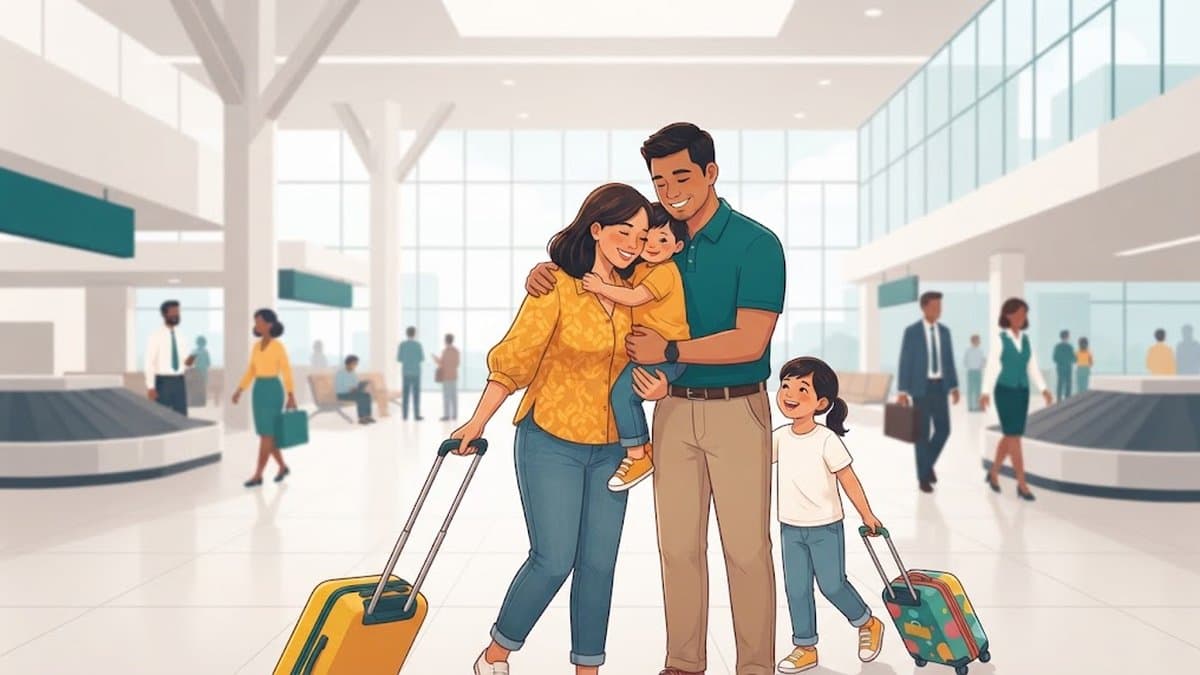
Key Takeaways
- A spouse or child can live with you in Japan on the Dependent (家族滞在) status of residence if you are in Japan on one of the statuses listed by the Immigration Services Agency (ISA), such as Engineer/Specialist in Humanities/International Services, Nursing Care, Skilled Labor, Specified Skilled Worker (ii) or Student.
- On Specified Skilled Worker (i), bringing family is basically not allowed. On SSW (ii), a spouse and children can join if the requirements are met.
- The family member in Japan applies for the Certificate of Eligibility (COE) at the regional immigration bureau, or online with a My Number Card. There is no fee, and the standard processing period is 1 to 3 months.
- For Dependent COEs approved in August 2026, it took an average of 74.1 days from application to approval.
- Filipinos moving to Japan as mid- to long-term residents must submit a TB Clearance Certificate from a designated Panel Clinic when applying for a COE or a visa. Children are screened too.
- A COE is valid for 3 months from the date of issue. Your family then applies for the visa through the Japan Visa Application Center run by VFS, with PSA birth and marriage certificates issued within 1 year.
- After landing, your family registers their address at the city or ward office within 14 days. A spouse who wants a part-time job needs permission first, for up to 28 hours a week.
This article is for Filipinos who work or study in Japan, or plan to, and want their spouse and children to live with them. It follows the family route from start to finish: who can sponsor, the COE in Japan, the visa in the Philippines, and the first steps after landing. General COE rules are kept short.
Who can bring a spouse and children to Japan?
You can bring your spouse and children on the Dependent status if you live in Japan on one of the statuses the ISA lists for this purpose, and you support them.
A status of residence (在留資格) is the category under which a foreign national stays in Japan, such as Student or Nursing Care. The ISA defines the Dependent status as the daily activities of a spouse or child who is supported by a person staying in Japan on one of the statuses below. The person who supports the family is called the supporter (扶養者).
| Your status of residence in Japan | Japanese name |
|---|---|
| Professor | 教授 |
| Artist | 芸術 |
| Religious Activities | 宗教 |
| Journalist | 報道 |
| Highly Skilled Professional | 高度専門職 |
| Business Manager | 経営・管理 |
| Legal/Accounting Services | 法律・会計業務 |
| Medical Services | 医療 |
| Researcher | 研究 |
| Instructor | 教育 |
| Engineer/Specialist in Humanities/International Services | 技術・人文知識・国際業務 |
| Intra-company Transferee | 企業内転勤 |
| Nursing Care | 介護 |
| Entertainer | 興行 |
| Skilled Labor | 技能 |
| Specified Skilled Worker (ii) | 特定技能2号 |
| Cultural Activities | 文化活動 |
| Student | 留学 |
The period of stay on the Dependent status is set individually by the Minister of Justice, up to 5 years.
Can a Specified Skilled Worker bring family?
It depends on the level. The Ministry of Foreign Affairs (MOFA) explains the two levels of Specified Skilled Worker (SSW) like this:
| SSW (i) | SSW (ii) | |
|---|---|---|
| Bringing family | Basically not allowed | Possible if requirements are met (spouse, children) |
| Period of stay | Up to 5 years in total | No limit on renewals |
SSW (i) is also not on the ISA's list of statuses for Dependent. If you are on SSW (i) now and want to live with your family in Japan, the route goes through SSW (ii). MOFA's page says only "if requirements are met," so check the requirements on the official pages before you plan the move. What SSW (ii) is and how to move up from SSW (i) are in What Is the SSW (ii) Visa in Japan? A Guide for Filipinos on SSW (i).
How does the COE application work in Japan?
The Certificate of Eligibility (COE) is a document from Japanese immigration that your family needs before applying for the visa. The Embassy of Japan in the Philippines states on its visa checklist that the inviter (the family member in Japan who invites them) needs to apply to Japan Immigration for the COE in advance. So the first step happens in Japan, not in the Philippines. The general COE rules are in Certificate of Eligibility for Japan: Requirements and Timeline.
| Item | What the ISA says |
|---|---|
| Where to apply | The regional immigration bureau that covers the planned place of residence or the receiving organization |
| By mail | Not accepted |
| Fee | No fee |
| Standard processing period | 1 to 3 months |
| Online | Available |
A regional immigration bureau is the local office of the ISA that handles applications for a certain area.
Can the supporter apply online?
Yes. A spouse, child or parent who lives in Japan can apply online for a family member who wants the Dependent status. The online system requires a My Number Card, the card that carries your Japanese individual number.
What documents does the supporter prepare?
The ISA lists these documents for a Dependent COE:
- Application form, one copy, with one photo attached
- Return envelope with stamps for simplified registered mail attached
- Documents that prove the family relationship between the applicant and the supporter, such as a family register (戸籍謄本), a certificate of acceptance of a marriage notification (婚姻届受理証明書), a copy of the marriage certificate or a copy of the birth certificate
- A copy of the supporter's residence card or passport
- Documents that prove the supporter's job and income
For item 5, what you submit depends on how the supporter earns money.
| Supporter's situation | Documents |
|---|---|
| Works for pay or runs a business | A certificate of employment or a copy of the business license, etc., plus a residence tax certificate (課税証明書 or 非課税証明書) and a tax payment certificate (納税証明書), one copy each, showing total income for one year and tax payment status |
| Has no income from work (for example, a student) | Something that proves the supporter can pay the family's living costs, such as a bank balance certificate in the supporter's name or a certificate of scholarship payments |
How long does the COE take?
The ISA's standard processing period is 1 to 3 months. The ISA also publishes the actual number of days. For Dependent COEs approved in August 2026, the average was 74.1 days from application to approval.
The ISA notes that this figure counts the days from receiving the application until the approval was notified. If immigration asked for additional documents, the days until those documents were submitted are included. Refusals and withdrawn applications are not included.
How does the COE reach your family?
Since March 17, 2023, a COE can be received by e-mail. If the COE comes by e-mail, the embassy accepts a photocopy of that e-mail for the visa application.
A COE issued on or after August 1, 2022 is valid for 3 months from the date of issue. Your family needs to apply for the visa within that time.
Do your spouse and children need TB screening?
Yes, unless an exemption applies. Japan's pre-entry tuberculosis screening (JPETS) applies to nationals of the Philippines who intend to enter and stay in Japan as mid- to long-term residents, not counting re-entry permit holders. Since June 23, 2025, a TB Clearance Certificate must be submitted when applying for a COE or a visa.
- Children are screened too. For children under 5, a chest X-ray is done in the same way as for adults if the interview and physical exam suggest active TB. If not, a tuberculin skin test (TST) or interferon-gamma release assay (IGRA) is done instead.
- Only a designated Panel Clinic can issue the certificate. A Panel Clinic is a clinic designated for this screening. Certificates from other clinics are not accepted.
- The certificate is valid for 180 days from the date of the chest X-ray. In some listed cases of contact with TB patients, it is reduced to 90 days.
- The applicant pays. The cost varies by Panel Clinic.
The embassy notice also lists groups that are temporarily exempted, such as Specified Skilled Workers, JET, JICA and MEXT participants, and EPA nurses and care workers. If you are not sure whether your spouse or children are covered, read the embassy notice itself before booking a clinic.
How do your spouse and children apply for the visa in the Philippines?
Once the COE arrives, your family applies for the visa through the Japan Visa Application Center, which started on April 7, 2025. It is run by VFS Services Philippines Private, Inc., with centers in Parañaque, Makati, Quezon City, Cebu and Davao. Appointments are booked through the VFS website, as the embassy notice explains.
The embassy's checklist for "STUDENT, WORKER AND DEPENDENT" (April 2025) lists these documents for a family member who will live with a spouse or parent in Japan:
| No. | Document | Notes |
|---|---|---|
| 1 | Passport | The holder's signature is required |
| 2 | Photocopy of passport | Identification page only |
| 3 | Visa application form | A facial photo (4.5 × 3.5 cm) must be attached |
| 4 | Certificate of Eligibility | A photocopy is fine; the original is not needed. If the COE came by e-mail, submit a photocopy of the e-mail |
| 5 | Birth certificate | Issued by the PSA within 1 year |
| 6 | Marriage certificate | Issued by the PSA within 1 year; for married applicants only |
| 7 | Authorization letter | For verification of the PSA certificates |
The PSA (Philippine Statistics Authority) issues birth and marriage certificates. If the PSA certificate is unreadable, submit the certificate issued by the Local Civil Registrar, the civil registry office of the city or municipality. If the PSA has no record, submit the Local Civil Registrar's certificate together with a Negative Certificate from the PSA, which shows that no record was found.
How much is the visa fee?
The embassy's consular fee table for July 1, 2026 to March 31, 2027 lists a single-entry visa at PHP 5,750 for nationalities other than those listed separately. The "free" line in the same table is for Philippine passport holders' temporary visitor visa. A Dependent visa is not a temporary visitor visa, so check the current fee table on the embassy website before your family goes to the Visa Center.
What should your family do first after landing in Japan?
Register your address within 14 days
Within 14 days of settling on a place to live, your family must report their address at the city, ward, town or village office that covers it. Your family shows the residence card (the ID card for foreign residents in Japan), or a passport stamped to say the card will be issued later, and files the resident registration at the counter. This counts as the address notification to immigration as well.
If a child is under 16, a relative aged 16 or older who lives with the child can file for them.
Get permission before a part-time job
The Dependent status does not include work by itself. If your spouse wants to work or run a business for income, within 28 hours a week, they need comprehensive permission to engage in an activity other than that permitted (資格外活動の包括許可) first.
The application goes to the regional immigration bureau that covers the place of residence, and there is no fee.
How to prepare the family application without extra trips
I have lived in Manila for more than 13 years. In my own visa paperwork here in the Philippines, the officer in charge asked me for additional documents, and I ended up going three times. A family application can also bring a request for more documents, and the ISA's processing-time figures include the days spent waiting for them.
In my SEO and affiliate work, I always compared this month's numbers with last month's and checked the source URL of every figure. I cross-checked several data sources, and in projects I set the criteria for "done" before starting. I also check that a source can be trusted and that its dates line up.
Applied to a Dependent application, those habits become these checks:
- Use the official lists as your checklist. Print the ISA's Dependent document list for the COE and the embassy's checklist for the visa, and tick each item. Decide that the set is "complete" only when every line is ticked.
- Check the date of each list. The embassy checklist used here is dated April 2025, and the fee table covers July 1, 2026 to March 31, 2027. Open the official pages again just before you apply.
- Line up the dates of your documents. PSA certificates must be issued within 1 year. The TB certificate is valid for 180 days from the X-ray, and the COE is valid for 3 months from issue. Write these dates side by side so nothing expires before the visa application.
- Cross-check the same facts across documents. Names and birth dates should match on the passports, the PSA certificates and the COE application.
- Compare advice with the source. If a friend or a social media post says the rules are different, check the ISA and embassy pages yourself.
It also helps to talk with people who have already brought their families to Japan. Listen to their experience, then check what they say against the official pages.
FAQ
Q: Can I bring my family to Japan on Specified Skilled Worker (i)?
Basically, no. MOFA states that bringing family is basically not allowed on SSW (i), and possible on SSW (ii) for a spouse and children if the requirements are met. SSW (ii) is on the ISA's list of statuses that can support a Dependent family member; SSW (i) is not.
Q: How long does a COE for a dependent take?
The ISA's standard processing period is 1 to 3 months. For Dependent COEs approved in August 2026, the average was 74.1 days, including any days spent waiting for additional documents.
Q: How much does the COE cost?
The COE application itself has no fee. The visa is a separate step at the Visa Center; the embassy's fee table for July 1, 2026 to March 31, 2027 lists a single-entry visa at PHP 5,750 for nationalities other than those listed separately. The TB screening is paid by the applicant, and the cost varies by Panel Clinic.
Q: Can my spouse work in Japan on a Dependent visa?
Yes, with permission. A spouse on the Dependent status needs comprehensive permission to engage in an activity other than that permitted, which allows work or a business for income within 28 hours a week. The application is free and goes to the regional immigration bureau.
Summary
To bring a spouse and children to Japan, the supporter must be in Japan on one of the statuses the ISA lists for the Dependent status, such as Engineer/Specialist in Humanities/International Services, Nursing Care, Skilled Labor, SSW (ii) or Student. On SSW (i), bringing family is basically not allowed. The supporter applies for the COE in Japan, at the regional immigration bureau or online with a My Number Card; it is free, takes 1 to 3 months as a standard, and averaged 74.1 days for Dependent approvals in August 2026. Your family needs a TB Clearance Certificate from a designated Panel Clinic, then applies for the visa at the Japan Visa Application Center with the COE (valid for 3 months) and PSA certificates issued within 1 year. After landing, register your address within 14 days, and get permission before any part-time job.
Start today by printing the official document lists and writing down the issue and expiry dates of every document your family holds. If you are still planning your own move to Japan through an agency, check its license with the DMW licensed agency search on /check first. To compare remittance rates for sending money for these costs, use /money.
Sources
- Immigration Services Agency, Status of residence "Dependent" (在留資格「家族滞在」): https://www.moj.go.jp/isa/applications/status/dependent.html
- Ministry of Foreign Affairs, System overview, status of residence Specified Skilled Worker (制度の概要 | 在留資格 特定技能): https://www.mofa.go.jp/mofaj/ca/fna/ssw/jp/overview/index.html
- Immigration Services Agency, Application for a Certificate of Eligibility: https://www.moj.go.jp/isa/applications/procedures/16-1.html
- Immigration Services Agency, Online application: who can apply (PDF): https://www.moj.go.jp/isa/content/001369137.pdf
- Immigration Services Agency, Processing period for residence examinations, approvals in August 2026 (PDF): https://www.moj.go.jp/isa/content/001473096.pdf
- Immigration Services Agency, Validity period of the Certificate of Eligibility (PDF): https://www.moj.go.jp/isa/content/930005023.pdf
- Embassy of Japan in the Philippines, Pre-entry TB screening: https://www.ph.emb-japan.go.jp/itpr_en/11_000001_01844.html
- JPETS, FAQ: https://jpets.mhlw.go.jp/faq/
- Embassy of Japan in the Philippines, Japan Visa Application Center: https://www.ph.emb-japan.go.jp/itpr_en/00_000035.html
- Embassy of Japan in the Philippines, Checklist: Student, Worker and Dependent (PDF): https://www.ph.emb-japan.go.jp/files/100479463.pdf
- Embassy of Japan in the Philippines, Consular fees, July 1, 2026 to March 31, 2027 (PDF): https://www.ph.emb-japan.go.jp/files/101049024.pdf
- Immigration Services Agency, Notification of place of residence after new landing: https://www.moj.go.jp/isa/applications/procedures/nyuukokukanri10_00021.html
- Immigration Services Agency, Permission to engage in activity other than that permitted: https://www.moj.go.jp/isa/applications/procedures/nyuukokukanri07_00004.html
- Immigration Services Agency, Application for permission to engage in activity other than that permitted: https://www.moj.go.jp/isa/applications/procedures/16-8.html
About this guide
Free, honest guide to working and studying in Japan
- ●Every rule is checked against DMW and Immigration Services Agency sources
- ●Written in plain English, with Tagalog where it matters
- ●No job ads, no referrals, no fees from agencies
- ●Corrections welcome through the contact form
Hanapon is run from Manila by a Japanese engineer who reads the Japanese-language rules directly and checks them against what agencies tell applicants here. If something on this page is out of date, tell us and we will fix it.
Before you pay anyone, check the license.
Free, one minute, and it is the single step that stops most scams.
Related Articles
Driving in Japan With a Philippine License: IDP or Full Conversion?
A Philippine license alone does not let you drive in Japan. You need an international permit for a short stay, or a full conversion if you live here — and conversion got harder in October 2025.
9/21/2026
Changing Jobs in Japan on SSW: What Your Visa Actually Requires
Your SSW visa is tied to a named employer. Changing jobs always means a status of residence application, and the rules differ sharply depending on whether you stay in the same field.
9/19/2026
Permanent Residency in Japan: Requirements for SSW and TITP Workers
Permanent residency in Japan needs 10 years total, but SSW (i) and TITP years don't count toward the 5-year work-status part. Here is what actually counts, and what is about to change.
9/18/2026
Japan Pension Refund: How to Claim the Lump-sum Withdrawal Payment
Left Japan after paying into the pension for 6 months or more? You can claim part of it back, but only within 2 years. Here are the conditions, the documents, the amount, and the mistakes that delay the money.
9/13/2026

Registered Support Organizations in Japan: What They Must Do for You (and Must Never Charge)
SSW (i) workers get support from their employer or a registered support organization. Here is what they owe you, the 3-month check-in, and why support is free.
9/10/2026